Subscribe:

Ads 468x60px

Sunday, March 31, 2013

World's most expensive food!

What price you can imagine for the world's most expensive food? Lets take a look at some of it.

One of the Most Expensive Desert
Place: Serendipity 3, New York
Price: 25,000 $

Why so expensive: The Frrrozen Haute Chocolate ice cream sundae contains a blend of 28 cocoas, including 14 of the most expensive in the world. Also used edible GOLD in it. WOW :)

One of the Most Expensive Pizzas
Place:  Margo’s Pizzeria, Malta
Price: 2,400 $
Why so expensive: Up to 100 grams of white truffles and gold leaf. You have to place order at least one week in advance and, on the bright side, the restaurant chain gives all the money from this particular pie away to charity. Good way to 

"Who's that lady in the movie?" Google will find answer for you.


How many times you have faced the situation, when you are thinking about the movie and not able to summarize the name of the actor or actress in it. I guess the answer is many times. But now you don't need to worry about it, Google will take care of it.

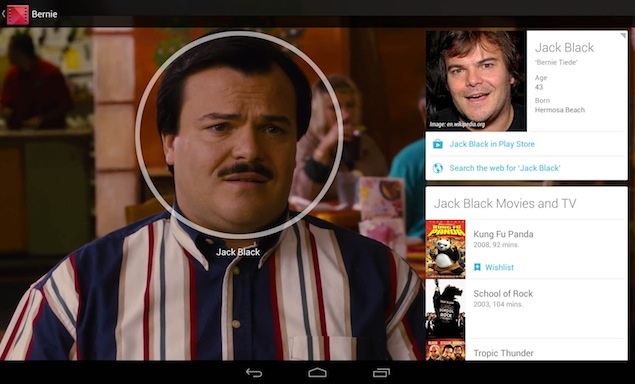
Google has added a brand-new feature to the Google Play Movies & TV app that provides little info cards whenever you pause a movie or a TV show. The cards provide details on the actors on screen and disappear when you resume the movie.

jack_black_google_play_movies.jpg

When you're watching a film on your tablet, simply press pause and cards will pop up with information about actors on screen. You can tap on an actor's face to learn more about him, like his age, place of birth, his character in the movie, and his recent work, or scroll through the info cards to learn more about the movie or soundtrack. When you resume the movie, the cards will disappear.

Currently this feature is available for select movies in the US Play Store, but Google says it will add more movies and countries as we go along. That's one less thing you need to remember and one more reason to love Google. :)


Friday, March 29, 2013

Android app that warns you when you are stressed!!


Now, a new Android app has been developed that can log stressful moments in a users' life, a report has said.
Dirk Trossen, a senior researcher in the computer laboratory at the University of Cambridge, developed the Android Remote Sensing App (AIRS), which can help people manage pressure and improve their general health.
The app uses all the sensors built into mobile devices to measure physical changes.

It also records environmental noise and tracks calls and text messages.

One can also track moods expressed through emoticons and use attached monitors to provide pulse and heart-rate data.

Trossen explained that the data feeds into software developed by Dana Pavel at Essex University that allows users to create a story-inspired visualization on their computer.

There are over 60 values the app can record, including surrounding noise level; social activity, as monitored by texts and calls; changing environmental conditions, measured through air pressure as well as light level; and even posture, measured by the phone's accelerometer, he added.
--ANI

6 signs that show your iPhone is stressing you out!


New York, Mar. 26 : A co-dependent relationship with your iPhone could be contributing to anxiety in more ways than most people realize, a study has revealed.
A 2011 study found that when youngsters are unplugged from technology for just 24 hours, most of them experience physical and mental symptoms of distress, the Huffington Post reported.
Image Source: www.geekation.com
The six signs that your smartphone might be majorly stressing you out are:

First sign is that a person feels the urge to respond to the texts or emails. If these things get a person's heart rate going, there's a good chance that their smartphone is adding stress to their life.

Another sign is that a person has phantom cellphone syndrome - which is when a person feels the phone vibrating in their back pocket even when its not.

Third sign of addiction is that the person is constantly thinking about what everyone else is doing and all the things they might be missing out on at any given moment, scrolling through party photos and enthusiastic weekend updates on your News Feed make them feel sad or anxious, the problem has been given the name of Fear of Missing Out (FOMO).

Addiction number 4 is that the person is not paying attention to their pals and family. For example, when a person is having dinner with friends or family, with their phone sitting next to their plate, and instead of ignoring it, they turn their attention away from the conversation to respond to a text.

Fifth sign is that the person feels restless when they are away from their phone.

The last sign is that the person has a difficult time concentrating in his class and eagerly awaits the ringing of the bell, so that they can check their phone and return the text.
--ANI

Monday, March 25, 2013

UN: 1,800 kids worldwide die daily due to unsafe water!


Recently on 22nd March we have celebrated the world water day. Now it's time to see the reality of drinking water situation in the world and specially in India. 
Approximately 2000+ kids under the age of five die every day due to the diseases related to poor sanitation, hygiene and unsafe water. And among all of them 24% of the deaths occurring in India only.
Worldwide, an estimated 2,000 children under the age of five die every day from diarrhoeal diseases and of these some 1,800 deaths are linked to water, sanitation and hygiene, according to the report.
The United Nations Children's Fund child mortality data reveals that about half of under-five deaths occur in only five countries: India, Nigeria, Democratic Republic of the Congo (DRC), Pakistan and China.
Two countries - India (24 per cent) and Nigeria (11 percent) - together account for more than a third of all under-five deaths. These same countries also have significant
populations without improved water and sanitation.
Of the 783 million people worldwide without improved drinking water, there are 119 million in China; 97 million in India; 66 million in Nigeria; 36 million in DRC; and 15 million in Pakistan.
Image Source: articles.latimes.com
The figures for sanitation are even bleaker. Those without improved sanitation in these countries are: India 814 million; China 477 million; Nigeria 109 million; Pakistan 91 million; and DRC 50 million.
As the world celebrates World Water Day today, UNICEF has urged governments, civil society and ordinary citizens to remember that behind the statistics are the faces of children.
Despite a burgeoning global population, these deaths have come down significantly over the last decade, from 1.2 million per year in 2000 to about 760,000 a year in 2011. However, UNICEF said that is still too many.
"Sometimes we focus so much on the big numbers, that we fail to see the human tragedies that underlie each statistic," said Sanjay Wijesekera, global head of UNICEF's water, sanitation and hygiene programme.
"If 90 school buses filled with kindergartners were to crash every day, with no survivors, the world would take notice. But this is precisely what happens every single day because of poor water, sanitation and hygiene," Wijesekera said in a statement.
"The numbers can be numbing, but they represent real lives, of real children. Every child is important. Every child has the right to health, the right to survive, the right to a future that is as good as we can make it," said Wijesekera.
Wijesekera said the progress already made since 1990 shows that with the political will, with investment, with a focus on equity and on reaching the hardest to reach, every child should be able to get access to improved drinking water and sanitation, perhaps within a generation.

Sunday, March 17, 2013

Study Says "Women worry more than men"


A Study published in the CDC's Morbidity and Mortality Weekly Report says that women are more likely then men to often feel worried and nervous.
Image Source: jezebel.com
As per the research by the Centers for Disease Control and Prevention in US, about 22 per cent of women said they felt worried, nervous, or anxious daily or weekly, compared to 16 per cent of men.
In general, these feelings were more common in young and middle-age adults than older people, MyHealthNewsDaily reported.
Previous studies have found older adults are generally happier and less stressed than younger people.
In the new study, which took place in 2010 and 2011, participants were asked "How often do you feel worried, nervous, or anxious? Would you say daily, weekly, monthly, a few times a year, or never?"
In men, 17 per cent of those ages 18 to 44, and 18 per cent of those between 45 and 64 reported daily or weekly worry, nervousness or anxiety. About 23 per cent of women ages 18 to 64 said the same.
Among those over age 75, eleven per cent of men and 16 per cent of women reported such feelings.

3 Books Every Entrepreneur Should Read.

Good reading is the only way to enhance your entrepreneurship qualities. Take a look at the reading material you must consider as an entrepreneur.10739325-entrepreneur-exclusive

1. Out of the Crisis by W. Edwards Deming

This is one of the best written books on management of employees, business and profits that every entrepreneur starting or who has just started his own venture must read. In fact, treat it as a Bible to implement in daily dealings and make your organization more process-driven.

2. Reality Check by Guy Kawasaki

The author is a venture capitalist and an entrepreneur himself. What the book provides is some useful insights in the form of posts. It can just be picked up and any page you flip open can be read for some instant nuggets of knowledge and motivation. Practical advice, in-the-face opinions and contemporary language make this one a must-have on your bookshelf.

3. How to Win Friends and Influence People by Dale Carnegie

Being an entrepreneur is not easy. It entails that added touch to your personality. Read this book to learn what you need to know to be successful and build successful associations. Practical and solid examples make this a useful read.

Reading habit will develop your soft skills, which's extremely important for botn your personal and professional life.

Friday, March 1, 2013

Mobile phones to match globe's population in 2014: UN


The number of mobile telephones worldwide is set to catch up to the globe's population next year, the United Nations' telecommunications agency said Thursday.

The International Telecommunication Union (ITU) said mobile subscriber numbers looked set to top seven billion in 2014.
"More than half of all mobile subscriptions are now in Asia, which remains the powerhouse of market growth," the ITU said.
By the end of 2013, overall mobile penetration rates will have reached 96 percent globally, 128 percent in the developed world, and 89 percent in developing countries, it added.
"Near-ubiquitous mobile penetration makes mobile cellular the ideal platform for service delivery in developing countries," said Brahima Sanou, director of the ITU's telecommunication development bureau.
The ITU also forecast that 2.7 billion people, or 39 percent of the world's population, would be using the Internet by the end of this year.
Image Source: webapptesting.com
Europe will remain the world's most connected region, with 75 percent Internet penetration, far outpacing the Asia-Pacific region at 32 percent, and Africa with 16 percent, it said.
"Household Internet penetration often considered the most important measure of Internet access continues to rise. By end 2013, ITU estimates that 41 percent of the world's households will be connected to the Internet," the agency noted.
Over the past four years, household access has grown fastest in Africa, with an annual growth rate of 27 percent, it said.But despite a positive general trend, 90 percent of the 1.1 billion households around the world that are still unconnected are in the developing world.

It also highlighted disparities in the field of broadband Internet.It said the star performers in terms of access speeds were South Korea, Hong Kong and Japan, alongside some surprises in Europe, including Bulgaria, Iceland and Portugal.

The cost of fixed-broadband services has dropped precipitously over the past five years, declining by 82 percent if measured as a share of gross national income per capita, it said.
In developing countries, however, such services remain relatively expensive, with residential fixed-broadband accounting for just over 30 percent of average monthly gross national income per capita.
Broadband is most affordable in Europe, where a basic subscription costs on average less than two percent of gross national income per capita, the ITU said.

Source: gadgets.ndtv.com

See more at: http://gadgets.ndtv.com/mobiles/news/mobile-phones-to-match-globes-population-in-2014-un-336989#sthash.3dGkO6gH.dpuf